Featured ADS-B Feeder of October 2026: Roger Coudé (VE2DBE) in Quebec, Canada
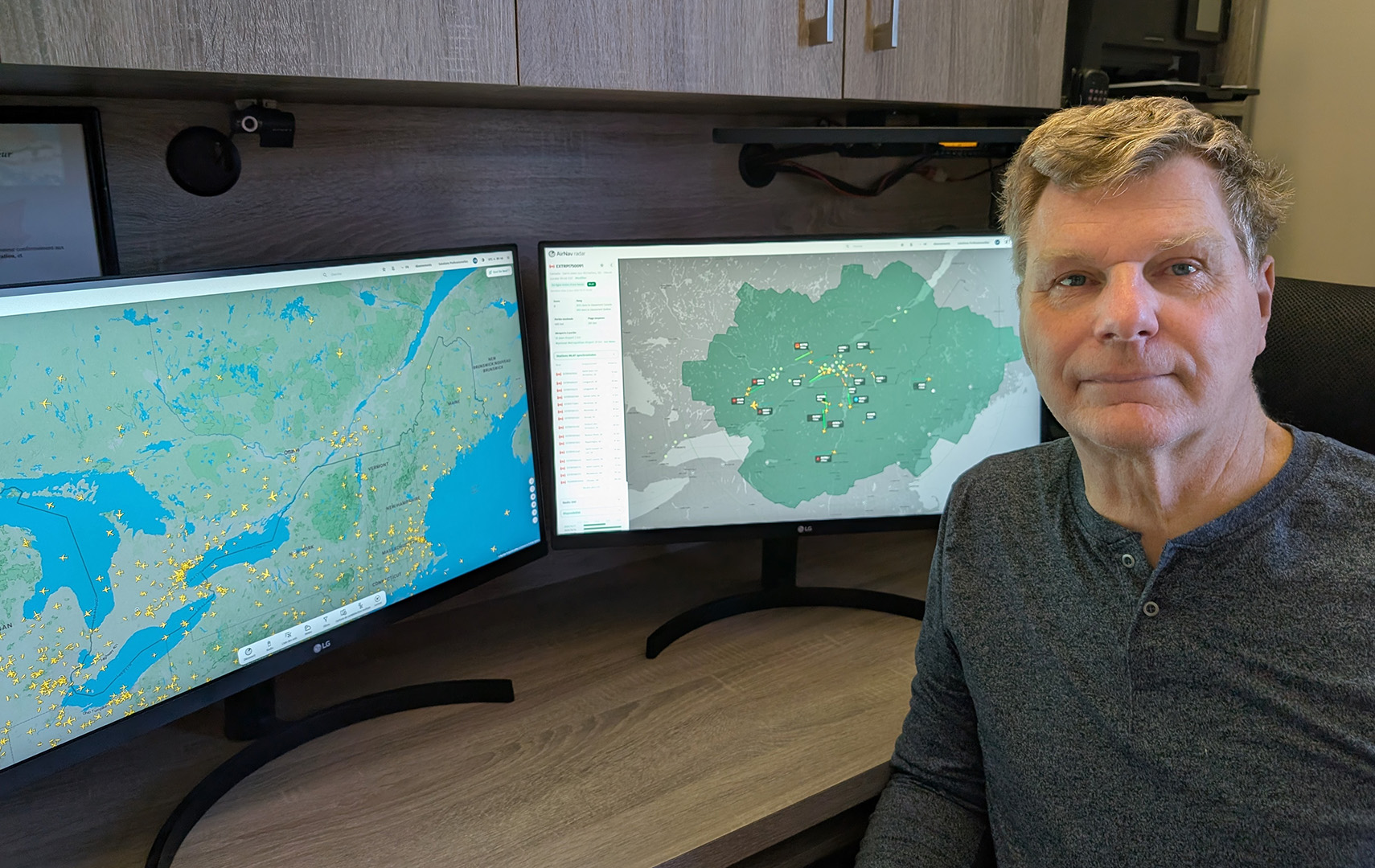
Roger Coudé, our ADS-B Feeder in Quebec, Canada
At AirNav Radar, our global network of over 55,000 ADS-B feeders provides real-time flight tracking and expands aircraft surveillance coverage. Behind every station is someone who contributes their time, equipment, and technical knowledge to make aircraft tracking possible.
For our October 2026 Featured ADS-B Feeder, we’re introducing Roger Coudé (VE2DBE), a retired radio-frequency (RF) engineer and amateur radio enthusiast based in Saint-Jean-sur-Richelieu, Quebec, Canada. Roger has followed air traffic since 2021 and recently joined the AirNav Radar feeder network to measure his station’s actual radio coverage and compare it with predictions from his own software.
With a reported reception range of 251 nautical miles, his station offers an interesting example of how radio engineering knowledge and ADS-B technology come together.
Meet Roger Coudé, VE2DBE
Roger is a retired RF engineer with a longstanding interest in radio technology. His amateur radio callsign is VE2DBE, and he shares his projects and technical interests on his website, www.ve2dbe.com.
He began following air traffic in 2021, using a dedicated ADS-B receiving setup to capture aircraft transmissions and observe traffic in his region. For Roger, joining the AirNav Radar network also meant putting theory into practice. On a friend's advice, he decided to feed his station to AirNav Radar to obtain measured radio coverage data and compare those results with the predictions from his own coverage-prediction software. This practical approach brings together two complementary perspectives: theoretical radio propagation modeling and real-world aircraft reception.
Inside Roger’s ADS-B station
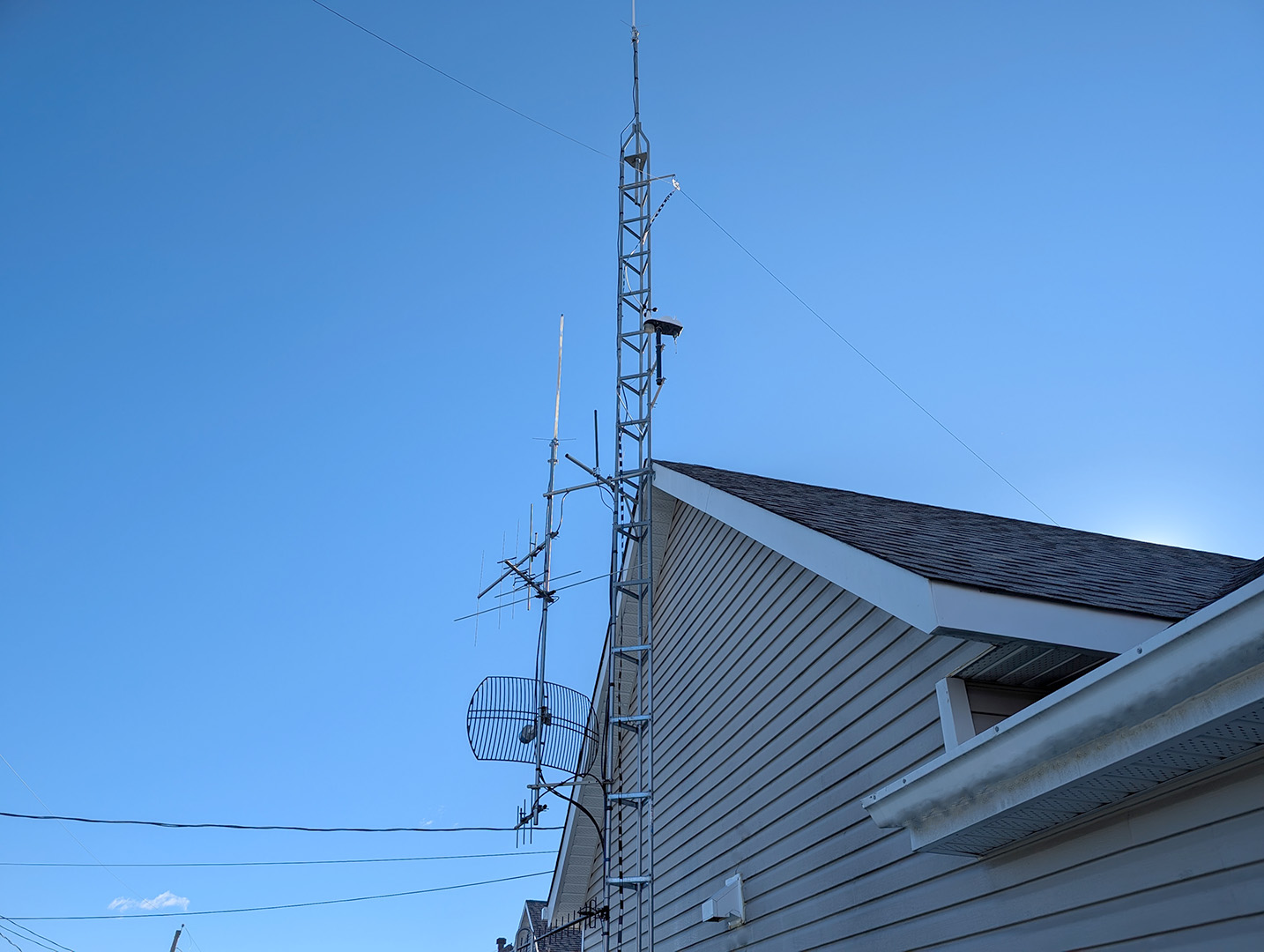
His Antennas Mounted At The Roof
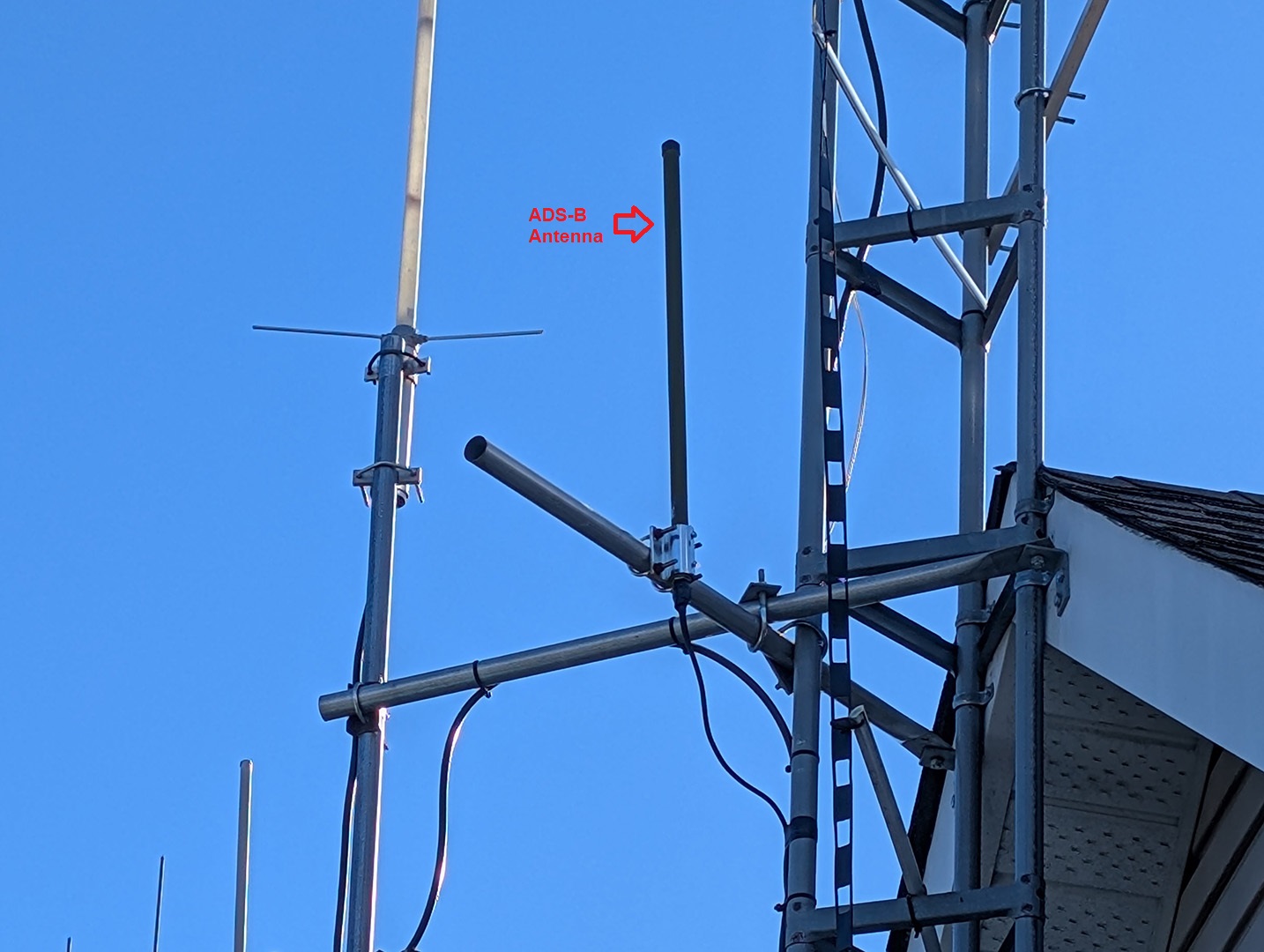
His Antennas Mounted At The Roof
Roger’s station uses a straightforward but dedicated hardware configuration, built around a purpose-designed antenna, a filtered and amplified receiver, and a Raspberry Pi computer.
-
Antenna: 1090 MHz ADS-B antenna, 66 cm
-
Receiver: AirNav RadarBox, amplified and filtered
-
Computer: Raspberry Pi
The antenna is designed to receive ADS-B transmissions on 1090 MHz, the frequency many aircraft use to broadcast information such as position, altitude, identification, and movement.
The AirNav RadarBox provides the receiving hardware, with amplification and filtering helping to process the signals captured by the antenna. A Raspberry Pi 4 serves as the station’s compact computing platform.
Together, these components form a dedicated ADS-B receiving station that can contribute aircraft data to the wider AirNav Radar network.
Measuring a reception range of 251 nautical miles
Located in Saint-Jean-sur-Richelieu, Quebec, Roger’s station has a reported reception range of 251 nautical miles (approximately 465 kilometers or 289 miles). This is a notable reach for an individual ground-based ADS-B station. Actual reception distances depend on several factors, including the aircraft’s altitude, antenna placement, surrounding terrain, antenna performance, receiver sensitivity, and radio propagation conditions.
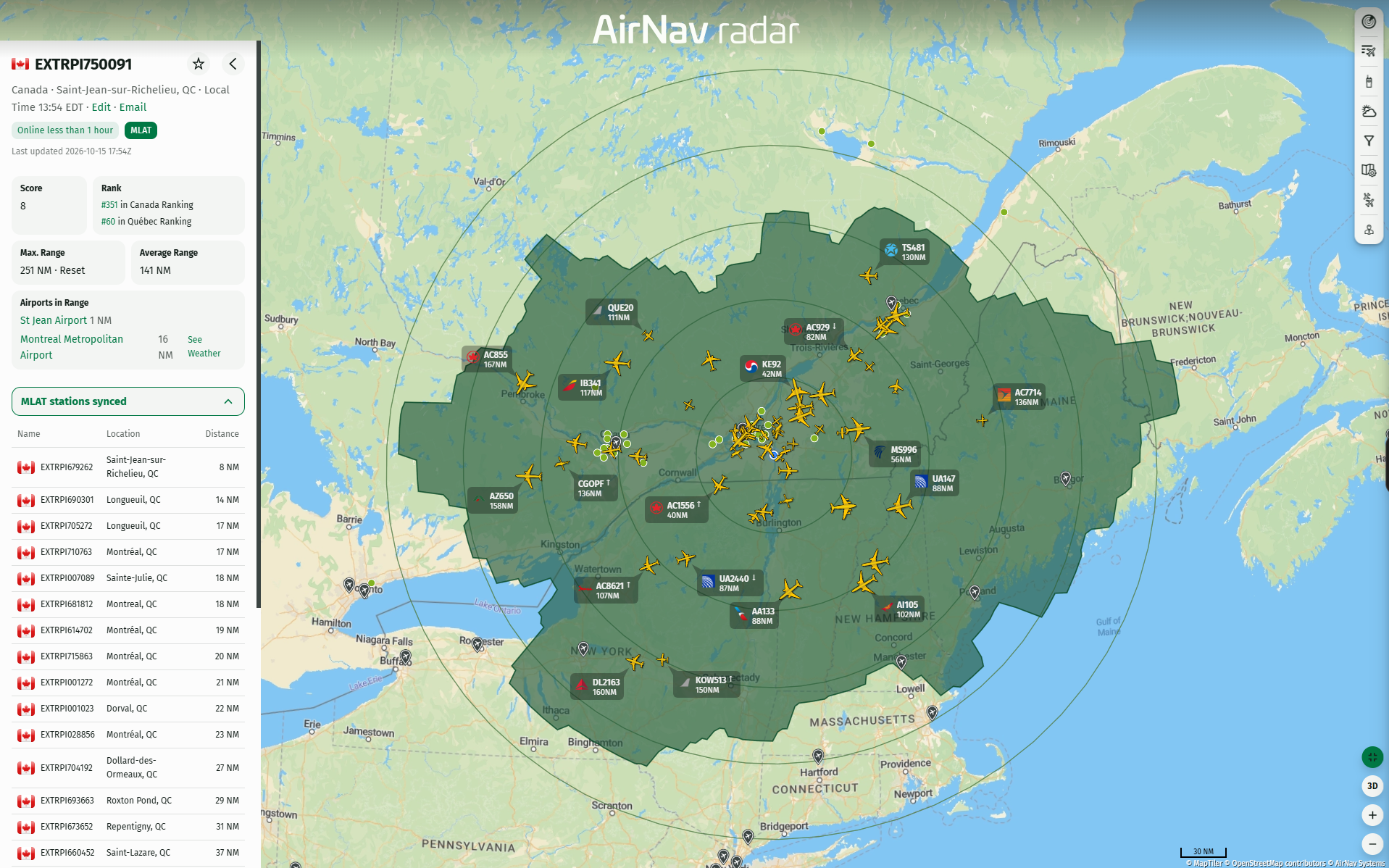
Because ADS-B signals generally travel along a line of sight, aircraft flying at higher altitudes can often be received from much greater distances than aircraft closer to the ground.
A station’s measured reception footprint can therefore vary considerably depending on the aircraft being tracked and the conditions at the time. For Roger, measuring this footprint matters because he already uses his own software to predict radio coverage. Feeding AirNav Radar allows him to compare those theoretical predictions with coverage observed in practice.
Saint-Jean-sur-Richelieu: A strategic location in southern Quebec
Roger’s station is located in Saint-Jean-sur-Richelieu, a city in Quebec’s Montérégie region, approximately 40 kilometers southeast of Montreal. Along the Richelieu River, the city lies in southern Quebec, near the Canada–United States border and the northern end of Lake Champlain.

Photo Source: I, Pregup, CC BY-SA 3.0
A personal project that contributes to a global network
Roger joined AirNav Radar’s feeder network to explore a specific technical question: how does his predicted ADS-B coverage compare with what his station actually receives? This is a good example of why people choose to operate ADS-B feeders. Some enjoy tracking aircraft, others want to experiment with antennas and radio equipment, and many appreciate being part of a wider community that shares a common interest in aviation and technology. At AirNav Radar, we value the people behind these stations and the individual contributions that help strengthen our coverage.
We thank Roger Coudé, VE2DBE, for sharing information about his station and for allowing us to feature his setup in this month’s community spotlight.
Join the AirNav Radar Network
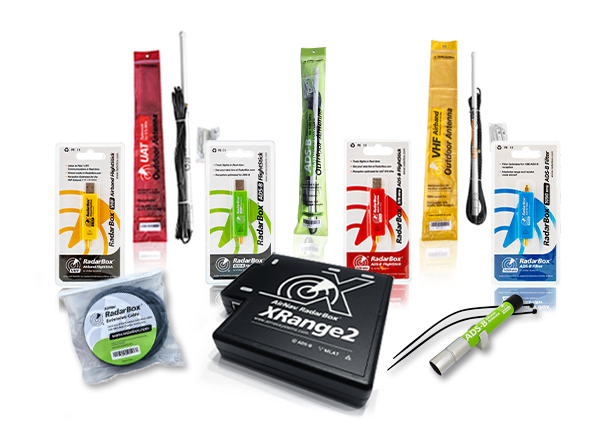
Discover our ADS-B hardware-focused products and explore the AirNav Radar store here.